
 By Wade Gene
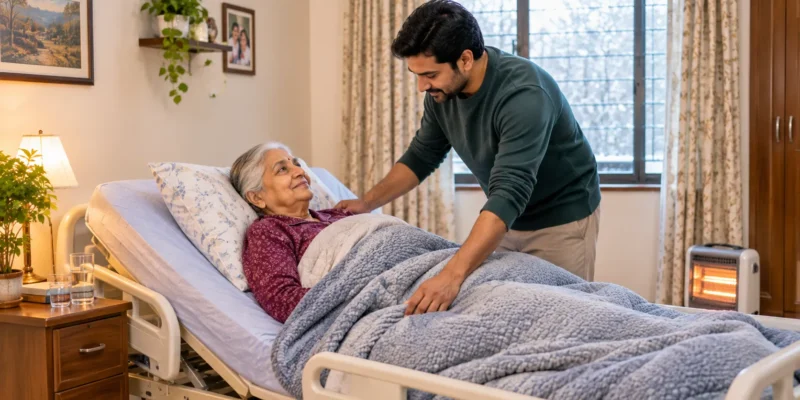
Winter is hard on anyone who can’t get out of bed. The room feels colder when you lie still all day, skin dries and cracks, and every diaper change becomes a small shiver for the patient. Many families caring for a parent at home switch to refastenable tape diapers around this time, mostly so they can check and adjust without undressing the person fully. Whether you already use refastenable tape diapers or are just starting, a few habits make winter easier.
Keeping Them Warm Without Overheating
Layers beat one heavy blanket. A cotton vest close to the skin, a light sweater, socks and a woollen cap keep heat in, and you can remove one layer if they start sweating. Sweat under a thick blanket is a problem of its own, because damp skin breaks down faster.
Be careful with heat sources. Hot water bags should be wrapped in a towel and never left against the skin for long, especially if the patient can’t feel heat well. And never leave a coal angithi burning in a closed room overnight; the fumes can kill quietly.
Bathing and Cleaning in Cold Weather
A full bath isn’t needed every day in winter. A sponge bath in a warm room works well, as long as you uncover one part of the body at a time and dry it before moving on. Keep the water luke Warm, and test it on your inner wrist first. Pay extra attention to skin folds, under the arms and the groin, since moisture trapped there turns into rashes.
Changing Diapers When It’s Cold
Warm your hands first, close the window, and get everything ready before you open the adult diaper tape, so the skin isn’t exposed while you hunt for wipes. Warm water and a soft cloth feel kinder than cold wet wipes straight from the packet.
Change as soon as it’s wet. A cold, wet pad against the skin for hours makes the patient shiver and raises the risk of rashes and urine infections. Before fastening a fresh one, let the skin dry fully. The adult diaper tape should hold firmly without pressing red marks into the belly. If you need to peek or adjust during the night, an adult diaper tape that refastens saves you from undressing the patient again in the cold.
Protecting the Skin From Dryness and Bedsores
Cold air and less water leave older skin thin and dry. A gentle moisturiser or a little coconut oil after cleaning helps, though a barrier cream works better under the diaper. Patients also move less when it’s cold, which raises the risk of bedsores. Turn them every two hours if they can’t shift on their own, and keep the bedsheet dry and free of wrinkles. A waterproof underpad below the hips saves you from changing the whole sheet at 3 am.
At every change, look under the adult diaper tape and around the hips for red patches that don’t fade. A loose adult diaper tape leaks and a tight one rubs, so recheck the size if the patient has lost weight.
Food, Water and Warning Signs
People drink much less in winter, and bedridden patients drink less still. That leads to constipation, darker urine and urine infections. Warm water, soups, dal and herbal tea through the day all count. Watch for fever, a new cough, unusual sleepiness or sudden confusion. In older patients, these can be the first sign of a chest or urine infection, and both need a doctor quickly.
Conclusion
Winter care for a bedridden patient is mostly about small things done on time. Warm layers, quick changes, dry skin and enough fluids prevent most problems before they start. Choose an adult diaper tape that fits well and is easy to adjust, keep the room safe and warm, and call the doctor early when something feels off.